
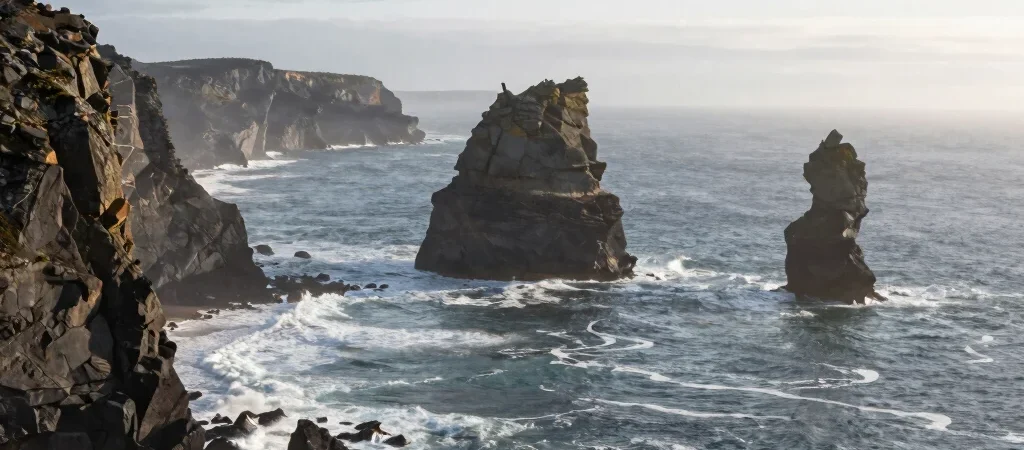
The Pacific coastline rewards travelers who embrace unpredictable weather and rugged cliffside trails. Dense marine layers frequently blanket the headlands, transforming ocean vistas into minimalist compositions of dark sea stacks and white surf. Navigating these shorelines with field notes helps you predict when fog will break.
Reading Ocean Fog Dynamics
Coastal fog rarely stays static; it shifts rapidly as offshore winds change direction throughout the morning. Keep your camera secured in a moisture-resistant shoulder bag while moving between vantage points to protect front elements from salt spray. Watch for gaps in the cloud layer where golden-hour light cuts through the mist.
Compositional Tactics for Crashing Surf
Fast shutter speeds freeze ocean spray, but slower exposures between half a second and two seconds reveal the motion of receding waves. Mount a neutral density filter to control light exposure while maintaining a small aperture for edge-to-edge sharpness across the frame.
Trail Safety and Coastline Stewardship
Coastal bluffs erode constantly under winter swells and heavy rains. Maintain a safe distance from undercut trail edges and avoid stepping onto fragile coastal vegetation. Staying on designated tracks preserves delicate headland ecosystems for future independent wanderers.