
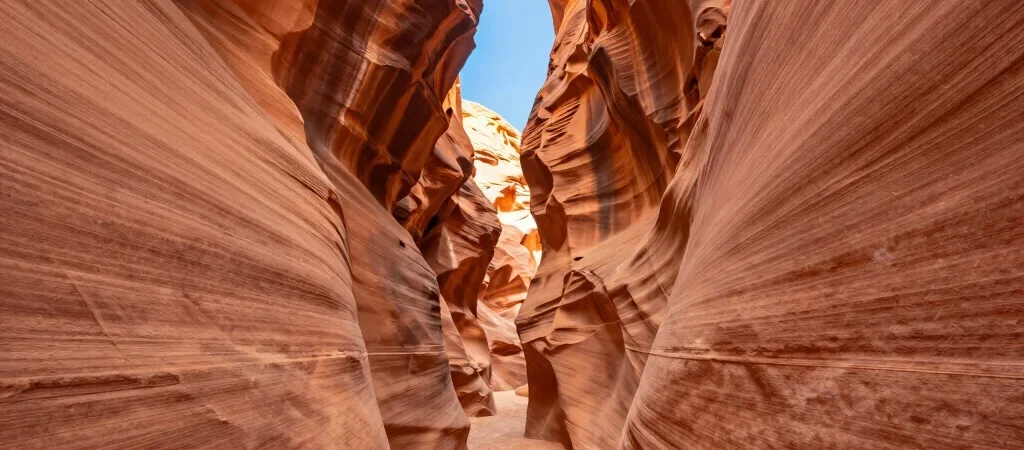
Deep canyon systems offer some of the most dramatic lighting conditions on the planet, provided you time your entry correctly. A thorough destination breakdown requires stepping off paved scenic loops and mapping routes based on canyon depth and sun angles. Real boots on the ground reveal how reflected sunlight illuminates hidden rock arches.
Navigating Sandstone Narrow Passes
Mornings in the high desert start cold, but temperatures rise sharply once the sun clears the canyon rim. Wear durable trail shoes with high-friction rubber outsoles for gripping slickrock slopes. Carry ample water and verify flash flood forecasts before entering any slot system.
Capturing Refracted Canyon Color
Direct midday sunlight creates harsh white hotspots inside narrow canyons, but indirect reflected light turns red rock into a glowing lantern. Position your lens toward walls opposite the sun to capture deep ochre and warm burnt orange tones without blown-out highlights.
Setting Up Camp After Sunset
Off-peak discovery continues long after the sun drops below the desert horizon. Clear desert skies offer minimal light pollution, making sandstone plateaus ideal for dark-sky photography. Set a wide aperture and manual focus on distant stars to capture the night sky above natural rock formations.